
 Call: 909-344-3001
- About Us
- Services

Free Consultation
- Testimonials
- Blog
- Service Areas

- Contact Us
Call: 909-344-3001






 At Small Energy Bill, we aim to help you grasp the fundamentals of solar energy and its advantages. Our team of skilled engineers can assist you in selecting the most suitable system for your home and provide advice on installation methods.
As an increasingly reliable and renewable source of power, solar energy is becoming a popular choice among homeowners. Solar energy is quickly becoming the top choice for people due to its affordability and positive environmental impacts, making it an obvious alternative to traditional sources of power.
In order to comprehend solar panels, one must initially become aware of photovoltaic cells. These specialized components absorb photons from the sun and convert them into direct-current electricity that can be kept in batteries or modified to alternating current for residential use.
Excess electricity can be fed back into the grid. The installation process involves selecting appropriate locations, connecting cables, and complying with local regulations. Once installed, homeowners can enjoy clean, efficient energy without worrying about fluctuating utility costs.
In recent years, solar energy has skyrocketed in popularity as a reliable and renewable power source for residential use.Harnessing the sun’s energy, solar panels are engineered to turn its natural light into electricity. You can then use that power for electronic gadgets or simply heat up your home and water. This article will provide a comprehensive overview of how solar panels work and how they can be utilized to make one’s home more sustainable.
It is critical to have an in-depth understanding of solar energy and the core elements that fuel it—such as photovoltaic (PV) cells. This kind of cell comprises semiconductor components including silicon, CIGS, CdTe or perovskites which generate electricity when exposed to sunlight and linked with electrodes. By putting together a number of PV cells, direct current (DC) electricity can be created.
To use the DC electricity generated by the panel in homes, it must first be converted to AC using an inverter. The AC output is suitable for use by different electrical appliances at varying voltage levels. With proper installation and maintenance, households can reduce their reliance on fossil fuel-based energy sources and access reliable green power with minimal effort, reducing their carbon footprint significantly.
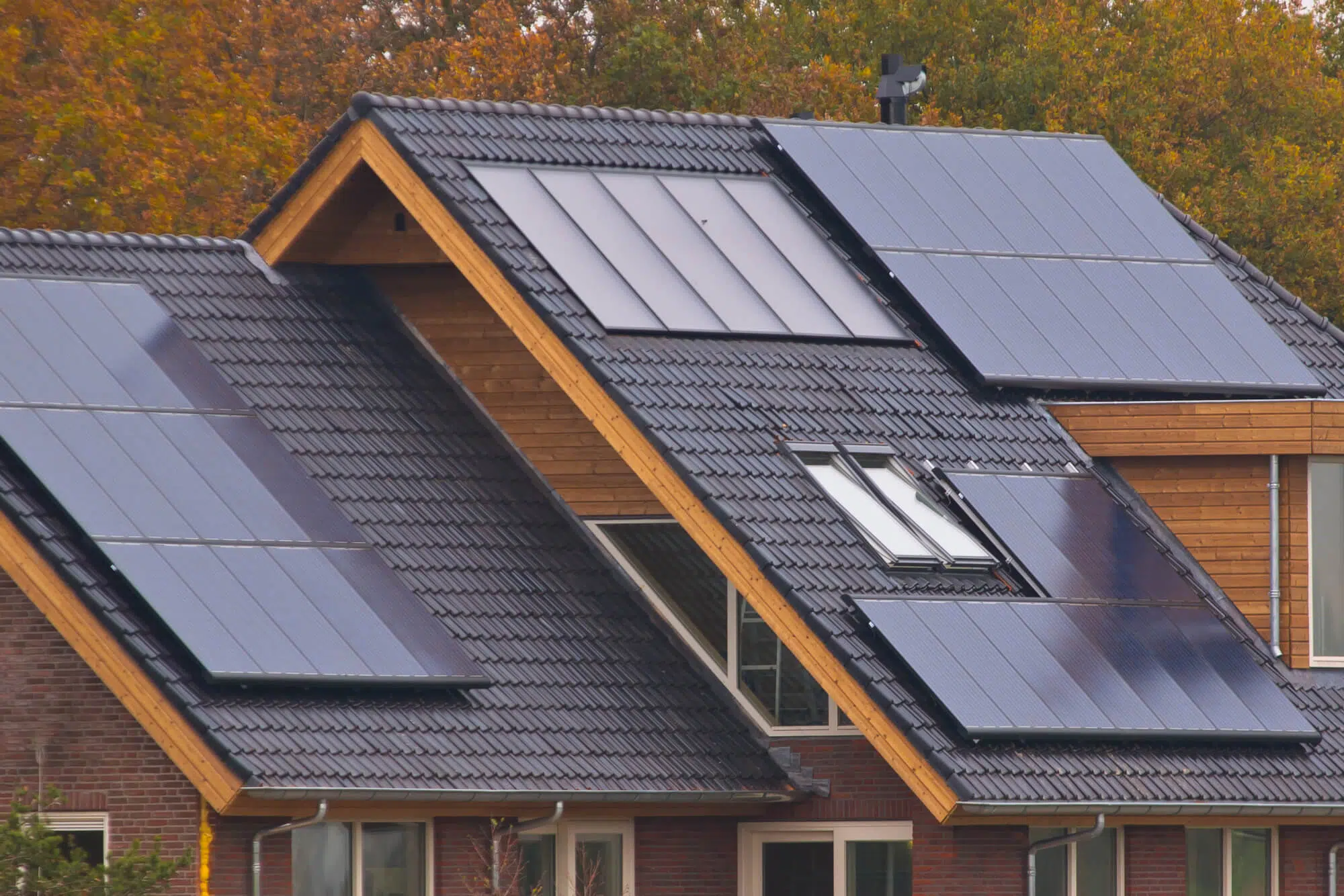 As solar energy becomes ever more desirable, an expansive selection of solar panels have come to the fore. These panels vary in size and shape depending on their purpose and design, as well as in their efficiency levels which are affected by their respective materials used to construct them.
The most commonly used type of panel is monocrystalline silicon, which has a high conversion rate from sunlight into electricity but can be expensive due to its complexity in manufacturing processes.
Polycrystalline cells are slightly less efficient than monocrystalline ones and often come with lower price tags, while thin-film or amorphous silicon based photovoltaic (PV) cells offer cost effective solutions that may still be suitable for some applications such as lighting systems. There are also other alternative technologies emerging such as concentrator PV technology which provides an even more efficient form of energy production at higher costs associated with its installation.
No matter what type of solar panel is chosen, it’s important to ensure proper maintenance and upkeep for optimal performance. Regular cleaning should be done to remove dirt and dust buildup that could obstruct light reaching the cells and reduce efficiency levels, while checking connections between components can help identify any potential issues before they cause serious damage. By taking these steps regularly, homeowners can enjoy many years of reliable green power from their solar system without having to worry about costly repairs or replacements down the road.
For a successful home solar power system, it is essential to pick the correct combination of components. Usually this includes photovoltaic (PV) panels, battery storage units, an inverter unit, wiring and safety measures for optimal efficiency and reliable renewable energy production.
The PV panels are responsible for converting sunlight into electricity by using semiconductor materials which produce an electrical curren
